Spoiler policy: the overview below is spoiler-free. The ending section is marked with a warning.
Watch: story explained
Is Resonance a sequel or prequel?
Resonance is a prequel, set 15 years before A Plague Tale: Requiem, and a standalone spin-off, Asobo confirmed you don't need to play Innocence or Requiem first. It tells the backstory of Sophia, the plunderer who appeared in Requiem, and reframes the myth of Theseus and the Minotaur as the origin of the Macula curse.
Searches with common misspellings, "prequale", "sequale", all point to the same answer: it's a prequel, not a sequel.
Where and when does it take place?
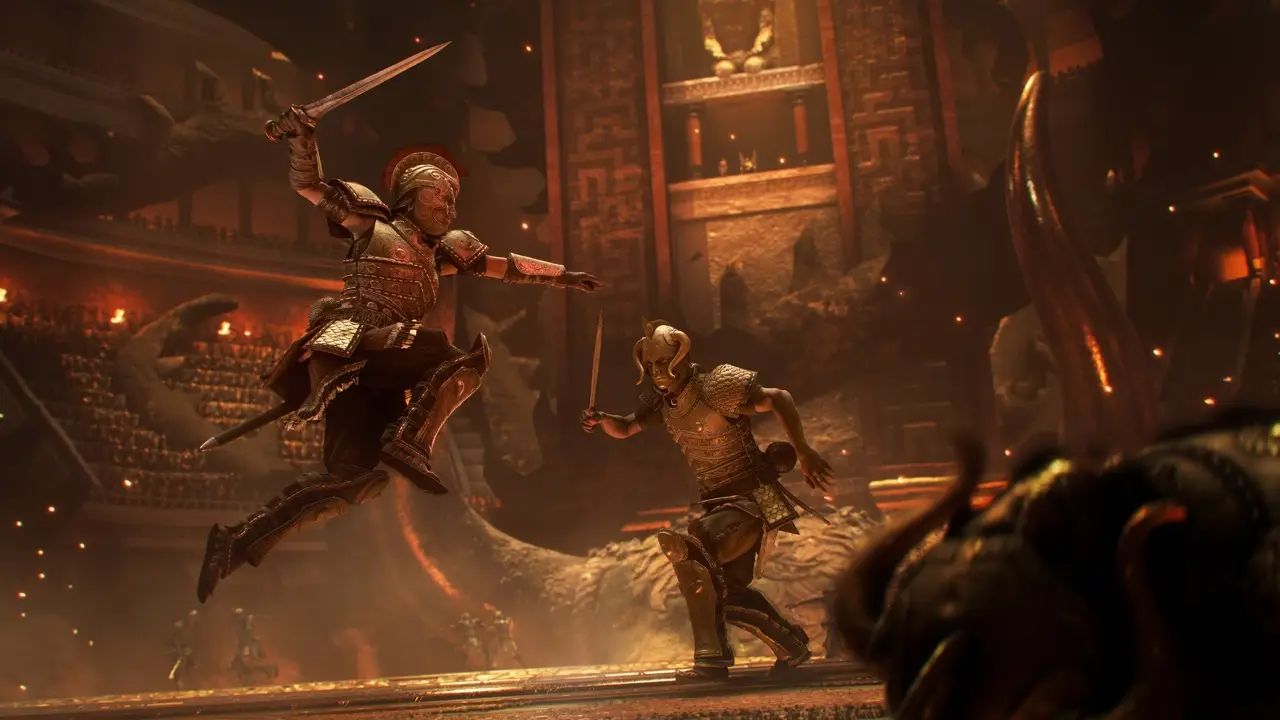
The story alternates between the early 14th century (Sophia's world of the Plunderers and Venice) and Minoan-era Crete, roughly 2,000 years before Christ, the "Minotaur's Island" of Sophia's visions. Asobo's devblog describes the game as "about family, loyalty and betrayal," with the Minoan sections designed to feel bright, pristine and colourful, marble and gold ornamentation against the darker medieval world.
Full story overview
Prologue, the convent (spoiler-free setup)
As a six-year-old, Sophia is sent to a convent by her mother's family. There, nuns use children in experiments: they inject a substance that turns their veins black and forces them to draw what they see. Sophia's visions show a green door, a Minotaur statue and a golden palace. She survives, "most didn't," as she later says. Her father Alec infiltrates the convent, kills the nuns, and rescues her.
Act 1, the Plunderers' Den
Sophia grows up among the Plunderers, a gang of thieves who strip battlefields and ruins. Her visions continue, and Alec believes the island from her drawings may hold a cure. He leaves with his second-in-command Faro to find it, and dies on the expedition. Faro keeps a promise to Alec and raises Sophia, who trains every day with Ezra, Faro and Irene, determined to become a warrior.
Act 2, Venice and the key
Years later, the gang learns the key to the island is held in Venice's arsenal. During the carnival, Sophia and Leni infiltrate the city while the rest of the gang raids the arsenal. Sophia overhears that the army knows their plan, someone has betrayed them. She races back, but it's too late: Ezra takes arrows opening the doors and dies, telling Sophia to grab the key from a chest on a nearby ship. She escapes with the key, the sphere and her father's book. The gang's settlement is burned by the Venetian army, and Faro, convinced Sophia sold them out, fights her. She wins but spares him, takes the book and sphere, and sails for the island with Leni.
Act 3, Minotaur's Island
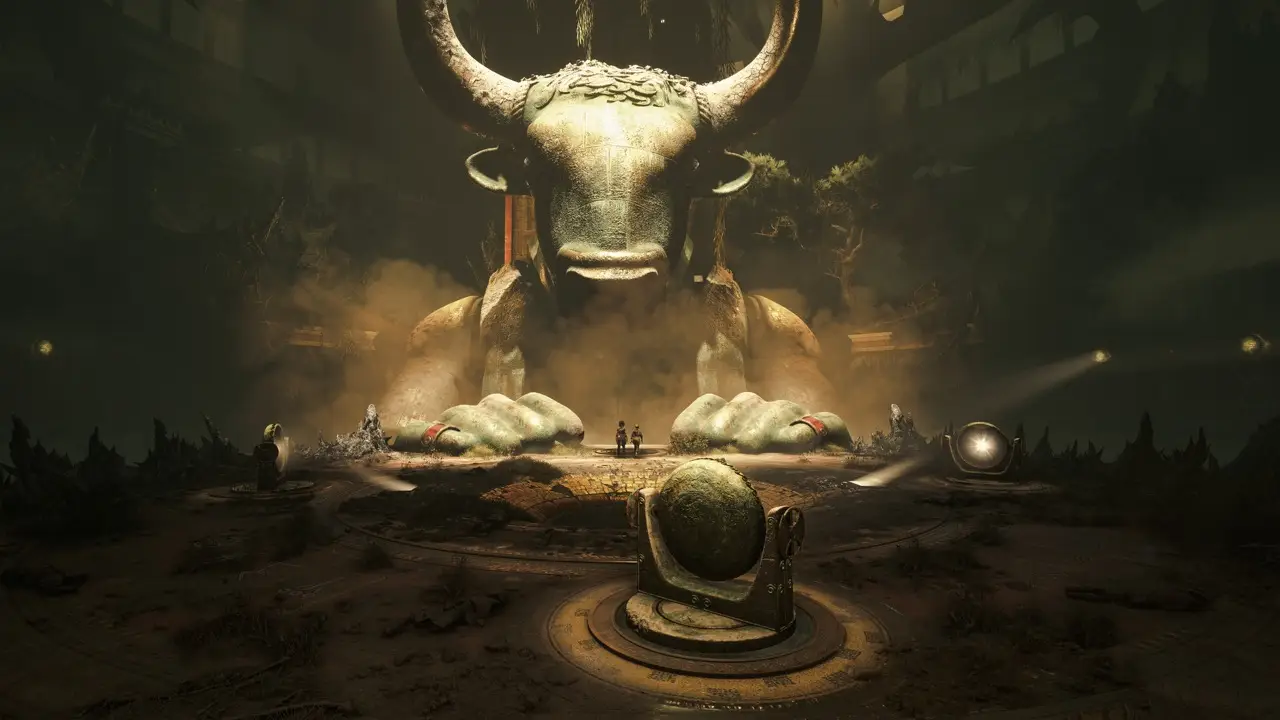
The island is ancient Crete. Using her father's drawings, Sophia and Leni find the green doors from her visions and enter a Minoan world of frescoes, blue dust that tracks sound, petrified victims and a creature that hunts by breathing in the dust. Through visions Sophia experiences the life of a Minoan warrior, "Theseus", fighting in the island's trials. She upgrades the sphere, solves light puzzles, and uncovers Daedalus' workshop, where she learns the mechanism built to contain the beast: it fears light.
Act 4, the truth behind the myth
The warrior Sophia has been seeing is not Theseus at all. She is Ariadne, daughter of King Minos, who disguised herself as Theseus to expose her father. The "Minotaur" is Asterion: Minos' son, a boy with white hair carrying the Macula in his blood. Daedalus built the labyrinth and the trials; Minos used warriors as would-be champions to kill his own son. Ariadne's attempt to free Asterion ends with Minos killing her, and Asterion's grief consuming the island. The traitor who destroyed the Plunderers is revealed as Irene, and Sophia kills her on the island.
Asterion and the Minotaur (spoiler-heavy)
Spoilers. This section gives away the game's central myth reveal. Skip to the ending section only if you have finished the story.
People searching for "asterion a plague tale" are usually looking for one answer: who the Minotaur really is. In Resonance, the Minotaur is Asterion, the son of King Minos, and he is not a monster in the sense the myth suggests. He is a boy born with the Macula, the same curse that later marks Basilius and Hugo, and his white hair is the game's nod to the white bull of the legend. The island's corruption, the petrified victims, the blue substance and the light-fearing creature are all manifestations of his curse, contained for years inside the labyrinth and the trials Daedalus built.
The cruelest turn is the reveal about Theseus. The warrior Sophia sees in her visions is not Theseus at all; she is Ariadne, Asterion's sister, who competed in the trials disguised as her brother to expose what Minos was doing. Her plan did not end the way the myth remembers it. When Ariadne tried to free Asterion, Minos killed her, and Asterion's grief is what finally consumed the island. Everything Sophia fights, from the trials to the creature to the structure at the labyrinth's heart, traces back to that family tragedy, which is also the earliest known point of the Macula in the series timeline.
Story-wise, Asterion matters for two reasons. He turns the prequel into the franchise's origin story, since the curse that drives Innocence and Requiem first appears here in a human form. And he makes the ending personal: Sophia is not just killing a monster, she is destroying the shell of corruption around someone who never chose the curse, and Ariadne's echo is there to tell her brother to let go. The fight itself is covered in theChapter 13 walkthrough, and the character hub has the plain, spoiler-light version of the same relationship.
The ending (spoiler warning)
Spoilers for the final chapters. Skip to the lore section below if you haven't finished the game.
Guided by Ariadne's echo, Sophia reaches the heart of the labyrinth, where the Minotaur is a structure encasing Asterion, merged with the Macula. She blasts it with the concentrated light beam, releasing the creature's spawn and destroying them all. Ariadne speaks to her brother, telling him to let go of the rage; Sophia burns the corruption away and is healed of the affliction she carried since childhood.
She returns to find Faro gone, follows his blood trail, and finds him dead, his last act was holding the light so she could see where her father's body lay. She places a crown beside him and leaves the island by ship, finding one of Leni's lucky coins on the beach. Fifteen years later, she tells her story to Amicia, and the game ends teasing "how she met Arno", a bridge to Requiem.
Note: a pre-release story summary described an alternate ending involving a machine called the Zouna Engine and the erasure of the curse's timeline. That version conflicts with the launch-build walkthrough and full-playthrough analyses, so we mark it Unconfirmed and do not treat it as canonical.
Characters
Quick roles below; full profiles with story context live on the character hub.
| Character | Role |
|---|---|
| Sophia | Protagonist; a fierce young plunderer whose childhood experiments gave her visions and a connection to the Macula. |
| Alec | Sophia's father; former gang leader who dies seeking a cure on the island. |
| Faro | Alec's second-in-command; raises Sophia, leads the Plunderers, and eventually dies holding the light beam. |
| Leni | Sophia's closest friend and travelling companion, who gives her the lucky coin. |
| Ezra | Sophia's early trainer; dies protecting the gang in Venice. |
| Irene | A hardened fighter who trains Sophia, and is revealed as the traitor "the Viper". |
| Ariadne ("Theseus") | Minoan princess who competed as Theseus to expose King Minos; her echo guides Sophia. |
| Asterion | The "Minotaur", King Minos' son and the earliest known Macula carrier. |
| King Minos | Ariadne's father; kept Asterion imprisoned in the labyrinth and hid the truth. |
| Daedalus | The architect of the trials and labyrinth; plotted against Minos and built the light mechanism. |
Lore: the Macula, before Basilius and Hugo
Resonance is a big expansion of the series mythology. Before Basilius (Requiem) and Hugo (Innocence), the earliest known carrier is Asterion. His white hair echoes the white bull of the myth, and his curse manifests as the blue substance, the same colour recurring in the Macula's creatures. The island's black growths, petrified victims and the nebula that threatens to block the sun all mirror what players saw in France.
- The blue substance, the Macula's manifestation on Crete; it forms the creature, tracks victims, and petrifies those it catches.
- The creature, fears direct sunlight; Daedalus built light barriers, lenses and the beam mechanism to contain it.
- Echoes / Pierced Coins, small basins holding Ariadne's thoughts, allowing Sophia to "hear" her across millennia.
- Resonance, the shared connection between Sophia and Ariadne/Asterion, enabled by the stone necklace found with the key.
- The convent experiments, the nuns (possibly tied to the Order) were trying to create someone who could "hear the call" of the next carrier, which is why Sophia could sense the island, and later Hugo.
Themes
The story is about the corrosive weight of pride and legacy. Faro chases Alec's shadow until it destroys the gang; Sophia needs to prove she is more than her visions; Ariadne's pride blinds her to the cruelty of her brother's fate until it's too late. Reviews and analysis note the game is about letting go, of guilt, of an idealized past, and of the burden of a curse you didn't choose.
How it connects to Innocence and Requiem
Play the trilogy in release order and Resonance slots in as the missing origin: how the Macula manifested at its earliest known point, and how Sophia, already marked by the curse's experiments, ended up as the plunderer who ferries Amicia and Hugo to La Cuna in Requiem. The epilogue's exchange with Amicia also sets up how the two women first crossed paths with Arno.
The community has been deep in the lore since launch, see the story threads on Reddit (r/APlagueTale) and the Steam Community discussions for reader theories on the ending and the Macula's origins.
Who is Sophia? (quick answer)
Sophia is the protagonist of Resonance and the most important connective tissue between it and the rest of the series. In Requiem she's the plunderer who ferries Amicia and Hugo to La Cuna aboard her ship; in Resonance you see how she got there. Her backstory is brutal: born into a gang of battlefield scavengers, she was sent to a convent at six by her mother's family, where nuns experimented on children with injections that turned their veins black and forced them to draw prophetic visions. She survived, "most didn't", and carried the mark for the rest of her life.
That childhood shapes everything about her. Her father Alec rescued her and then died pursuing a cure on Minotaur's Island; his second-in-command Faro raised her, and she trained every day to become the fighter who later impresses Amicia. The visions never stopped, and they left her with a latent connection to the Macula: the curse that later infects Hugo and Basilius. It's why she can "hear" the island, and why the Order's experiments make sense in hindsight: the nuns were trying to create someone who could sense the next carrier.
In Requiem, Sophia is guarded, pragmatic and quick with her knife, a survivor who trusts slowly. Resonance explains exactly why: she's spent her whole life proving she's more than her curse, losing everyone who tried to protect her, and finally walking away from the island that took her father.
Resonance ending explained
The ending resolves three threads at once, the curse, the mentor, and the past. Each one is worth unpacking:
- The curse: the "Minotaur" at the labyrinth's heart is Asterion, King Minos' son and the earliest known Macula carrier, merged with the corruption. Sophia blasts his shell with the concentrated light beam, releasing the creatures that have hunted her, and burns the Macula's manifestation away. The act also heals her, the affliction she carried since the convent is gone. It's the series' first on-screen cure of the Macula, even if the curse itself continues elsewhere.
- The mentor: Faro dies holding the light beam that makes all of it possible. It's the completion of a promise he made to Alec, to look after Sophia, after years of doubt and misplaced blame. He spends his last strength showing her where her father's body lies, giving Sophia the closure Alec's death never allowed.
- The past: Sophia places a crown beside Faro, finds Leni's lucky coin on the beach, and sails away, leaving the island and her legacy behind. The epilogue jumps 15 years forward: Sophia is telling her story to Amicia, and the game teases "how she met Arno," bridging directly into Requiem.
Interpreted as a story about pride (as the analysis video puts it), the ending is deliberately quiet: nobody conquers the island, nobody gets rich, and the "treasure" Faro chased turns out to be a curse. What Sophia wins is freedom from it. If you're reading for lore, the key detail is that Asterion predates Basilius as the known origin of the Macula, making this the franchise's origin story in everything but name.
Story questions
Is Resonance a sequel or prequel?
A prequel, set 15 years before A Plague Tale: Requiem. It is a standalone spin-off, you don't need to play the earlier games.
Where and when does the story take place?
In the early 14th century, and partly in Minoan civilization around 2,000 years before Christ, on Minotaur's Island (Crete).
Who is Sophia?
A fierce young plunderer who appeared in A Plague Tale: Requiem. As a child she was used in experiments at a convent, which gave her visions of the island and marked her veins.
Is it the third A Plague Tale game?
It's a spin-off prequel rather than a direct third part. The main series continues with Innocence and Requiem.
Do I need to play the previous games?
No, Asobo confirmed it's standalone, though returning players will recognise Sophia and her world.
Sources: Steam, official description, Eurogamer, Ch.1 walkthrough, Eurogamer, Ch.14 walkthrough, Asobo devblog, Into the Myth, Gaming Harry, story explained (transcript). Resonance: A Plague Tale Legacy content and assets remain the property of Asobo Studio and Focus Entertainment.